
The Mental Edge is Being Ignored.
Firefighter training and education programs focus heavily on technical skills, tactics and physical conditioning — as they should. But there is a persistent gap: performance psychology rarely gets the attention it deserves. Yet arousal control, breath control and mental readiness are among the most important determinants of success under stress. When these skills are absent or underdeveloped, even well-trained crews can suffer from degraded decision-making, poorer motor control and slower recovery after critical incidents.
“The garbage man doesn't get excited when he turns the corner and sees trash, and you shouldn't get excited when you turn the corner and sees fire. You should expect fire on every run.”
— Lt. Andy Fredericks, FDNY
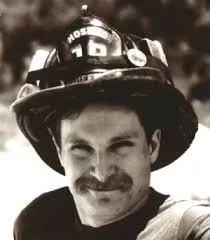
That quote captures a simple but powerful truth: mindset matters. Expectation, judgement under uncertainty and emotional regulation shape how a firefighter perceives risk, prioritizes tasks and executes fine motor skills while wearing heavy gear and breathing on an SCBA.
Why performance psychology is overlooked
Curricula are crowded. Recruit schools and in-house training are pressed to cover apparatus operations, search and rescue, hose handling, forcible entry, medical care and so on. Adding structured psychological skills training often falls to the bottom of the list.
Misconceptions about toughness. There’s a cultural tendency to equate mental readiness with “being tough” or “just doing the job.” That stigma discourages formal training in techniques that look soft but have hard outcomes.
Measurement challenges. It’s easier to test a hose advance under load than to quantify arousal management or cognitive flexibility. Without straightforward metrics, psychological skills are less likely to be prioritized.
Fragmented delivery. When performance psychology does appear, it’s often one-off lectures or wellness briefings rather than integrated practice that mirrors real-world stressors.
Why arousal control, breath control and mental readiness matter
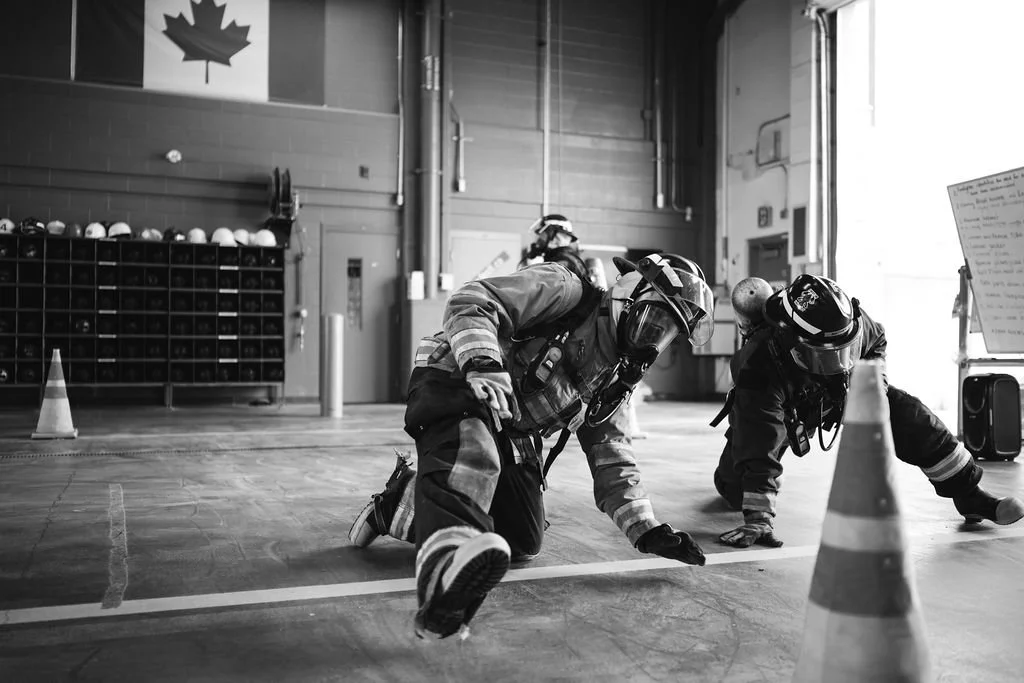
Fire students completing air management training with the intent of the session being to focus on breath control and positive self-talk when they are uncomfortable in the moment.
Photo by luxposure.ca
Arousal affects cognition. Elevated heart rate and adrenaline narrow attention, impair working memory and bias decision-making toward habit or panic responses. Managing arousal preserves situational awareness and critical thinking.
Breath influences physiology. Diaphragmatic breathing and paced exhalation modulate vagal tone, reduce sympathetic activation and improve fine motor control — essential when manipulating tools, radioing information or conducting search patterns while on SCBA air.
Mental readiness aids adaptability. Expectation setting, pre-performance routines and contingency planning let firefighters transition from routine to extreme environments with less cognitive disruption. This reduces startle responses and helps crews execute flow tasks under pressure.
Recovery and resilience. Post-incident regulation — breathing, grounding and short structured debriefs — speed physiological recovery and better consolidate learning from each event.
Practical, underused tools that work
Watch your “game film.” Just as athletes and teams review footage to refine technique and decision-making, firefighters benefit from reviewing real calls and training evolutions. Video review reveals habit patterns, communication breakdowns and opportunity costs that are invisible in the moment. Make reviews structured: identify decision points, alternative actions and physiological markers (e.g., visible breathlessness, rushed movements, missed instructions, indecisiveness, etc).
Practice breathwork on SCBA. Embedding controlled-breathing drills into familiar gear and contexts makes the skill automatic when stress hits. Simple drills: box breathing; extended exhale intervals during accountability pauses; paced breathing during low-intensity evolutions. Practice with SCBA so the sensations and timing match operational reality.
Pre-run mental routines. Short, team-based mental readiness checks — expectation setting, role confirmation, contingency cues — align crew mindset before committing. These routines reduce surprises and smooth transitions when the bell rings.
Scenario-based stress inoculation. Expose crews to graded stressors in training (noise, time pressure, unexpected complications) while they practice breathing and decision-making. Start small and increase complexity so adaptive responses build without overwhelming trainees.
How mindset and attitude compensate for experience gaps Experience is invaluable, but it’s not the only route to competence. Newer firefighters may lack the gut-level familiarity that years on the job bring; experienced firefighters may face novel scenarios where past patterns don’t apply. A prepared mindset bridges those gaps:
Expectation reduces startle. Framing each run with realistic expectations — that fire, smoke and rescue complications are likely — reduces surprise and conserves cognitive bandwidth.
Attitude guides priorities. A team attitude of methodical calm emphasises life safety and task clarity rather than heroics that increase risk.
Mental rehearsal substitutes for mileage. Deliberate mental practice and film review accelerate the development of pattern recognition that usually comes from long experience.
Implementation recommendations for departments
Make psychological skills part of the curriculum, not an add-on. Allocate time for breathing drills, pre-run routines and video review in recruit and in-service training.
Train in realistic environments, step up the stimulus gradually to not shock the system.
Fight the urge to set up training evolutions that are riddled with training scars. There are safe ways to accomplish realistic and valuable training for your Firefighters. Training them to find hose dummy’s is only setting them up for failure when it counts.
Fatigue makes cowards of us all. Don’t shy away from training until failure. Growth is uncomfortable but necessary for all levels of Firefighter.
Performance on the fireground has to be build on a foundation rooted in exceptional and intentful practice. Firefighter training typically lags behind in this specifically with its ability to build Firefighters that have the mental edge.
Use the tools discussed in this post and incorporate them into your regular training and drills. You’ll thank us later.
