
Data Review: PTF Program
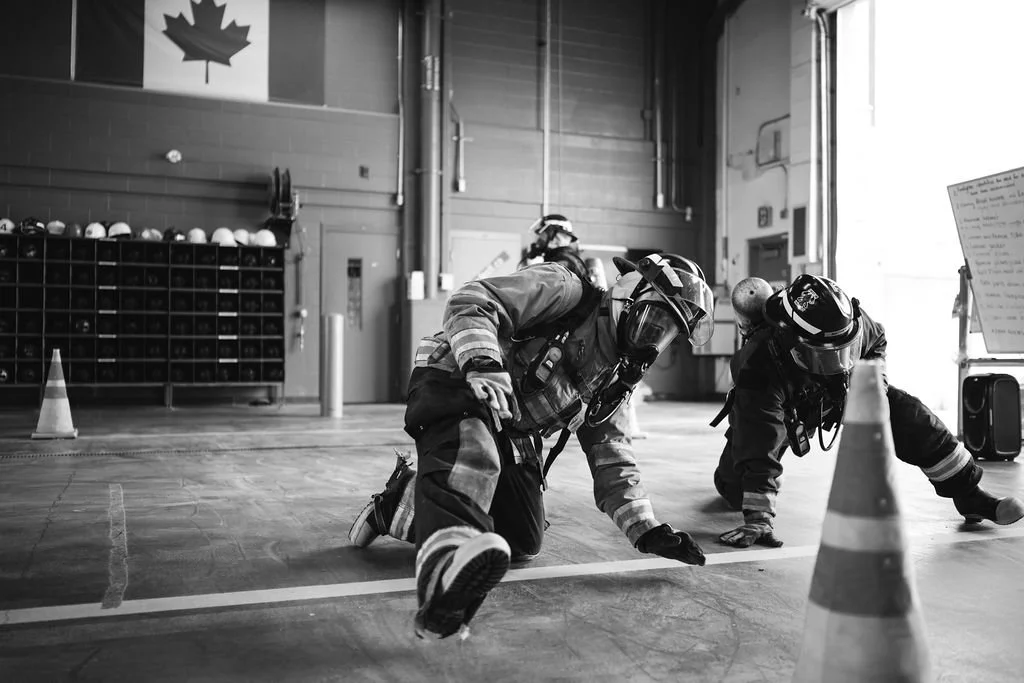
Students completing an air consumption course as part of their PTF program. Photo courtesy: Aous Poules
New white paper: Performance gains in new firefighters — evidence from nearly 200 students
We recently completed a white paper analysing data from almost 200 students who completed our Performance Training Foundations program. The dataset includes baseline fitness testing, ongoing air management training with SCBA, and sweat testing collected throughout each student’s training cycle. The results show clear, meaningful improvements in physiological fitness and on-scene performance markers — improvements that matter for safety, effectiveness, and career longevity for new firefighters.
Key findings at a glance:
Baseline deficits were common: on average, students entering the program did not meet the VO2 max standard commonly expected for firefighting tasks.
Substantial aerobic gains: by program completion, average VO2 improved markedly, bringing many students into or much closer to the target range necessary for high-intensity, sustained work.
Improved air management: SCBA air-consumption times improved across the cohort, indicating better pacing, breathing technique, and task efficiency under load. Students added an average of 4 minutes to their total time!
Consistent physiological monitoring: sweat testing and repeated measures showed adaptations in hydration and thermoregulation strategies consistent with improved conditioning.
Why these results matter
Firefighting is inherently a tactical, high-stress profession that places extreme demands on the body. New recruits are not simply learning procedures — they are learning to operate as tactical athletes. This white paper highlights two critical points:
Fitness is a performance and safety requirement. Poor aerobic fitness limits work capacity, increases fatigue, impairs decision-making under stress, and shortens SCBA duration during critical tasks. Improving VO2 and conditioning is not optional — it directly affects the ability to perform essential duties and return home safely.
Training must be specific and measurable. Our program combines structured conditioning, air management training, and physiological monitoring to produce measurable improvements. Improvements in VO2 tracked with better on-apparatus performance: students used air more efficiently and sustained higher work rates for longer.
What the data showed about VO2
At intake, the average student cohort fell short of expected VO2 benchmarks for firefighting. This is consistent with other reports showing many new firefighters begin service below optimal aerobic capacity. The encouraging finding in our white paper is the magnitude of change: after the program, average VO2 rose substantially. For many students this translated into:
Greater ability to complete repeated high-intensity tasks,
Reduced premature exit from training evolutions due to fatigue,
Improved resilience during prolonged incidents.
Air management = more than breathing techniques.
Air consumption is a practical, mission-critical outcome. Our air management training emphasised breath control, task pacing, and movement efficiency while wearing SCBA. The data showed consistent increases in SCBA run-times across the cohort. Longer air durations reduce the frequency of emergency air-related events, allow crews to complete required tasks without compromise, and increase margin for unexpected complications.
The role of monitoring: sweat testing measures provided insight into how trainees adapted physiologically. Monitoring allowed coaching staff to identify hydration needs, recovery deficits and individual responses to load so programming could be adjusted. This targeted approach accelerated gains and mitigated injury risk.
Implications for departments and training academies
Implement structured, measurable performance training for all recruits. Use baseline and follow-up testing so improvements are objectively tracked.
Integrate air management early. Teach SCBA-specific pacing and breathing strategies as part of physical training, not just technical drills.
Monitor physiology. Simple measures (VO2 testing when available, sweat and hydration monitoring, repeated fitness tests) help tailor training and recovery.
Treat new firefighters as tactical athletes. Investment in conditioning yields returns in safety, operational effectiveness, and reduced long-term attrition.
Conclusion:
Our white paper demonstrates that a focused, data-driven Performance Training Foundations program can produce substantial, measurable improvements in aerobic fitness and air management among new firefighters. Beginning recruits often arrive below VO2 standards, but with targeted training they can close that gap and better meet the physiological demands of the job. Departments that prioritize fitness as a core component of firefighter development will strengthen operational safety, capability, and resilience.
Download a free copy of the paper below!
If you would like to host a Performance Training Foundations Program for your school, station or department, contact us to see how we can help!
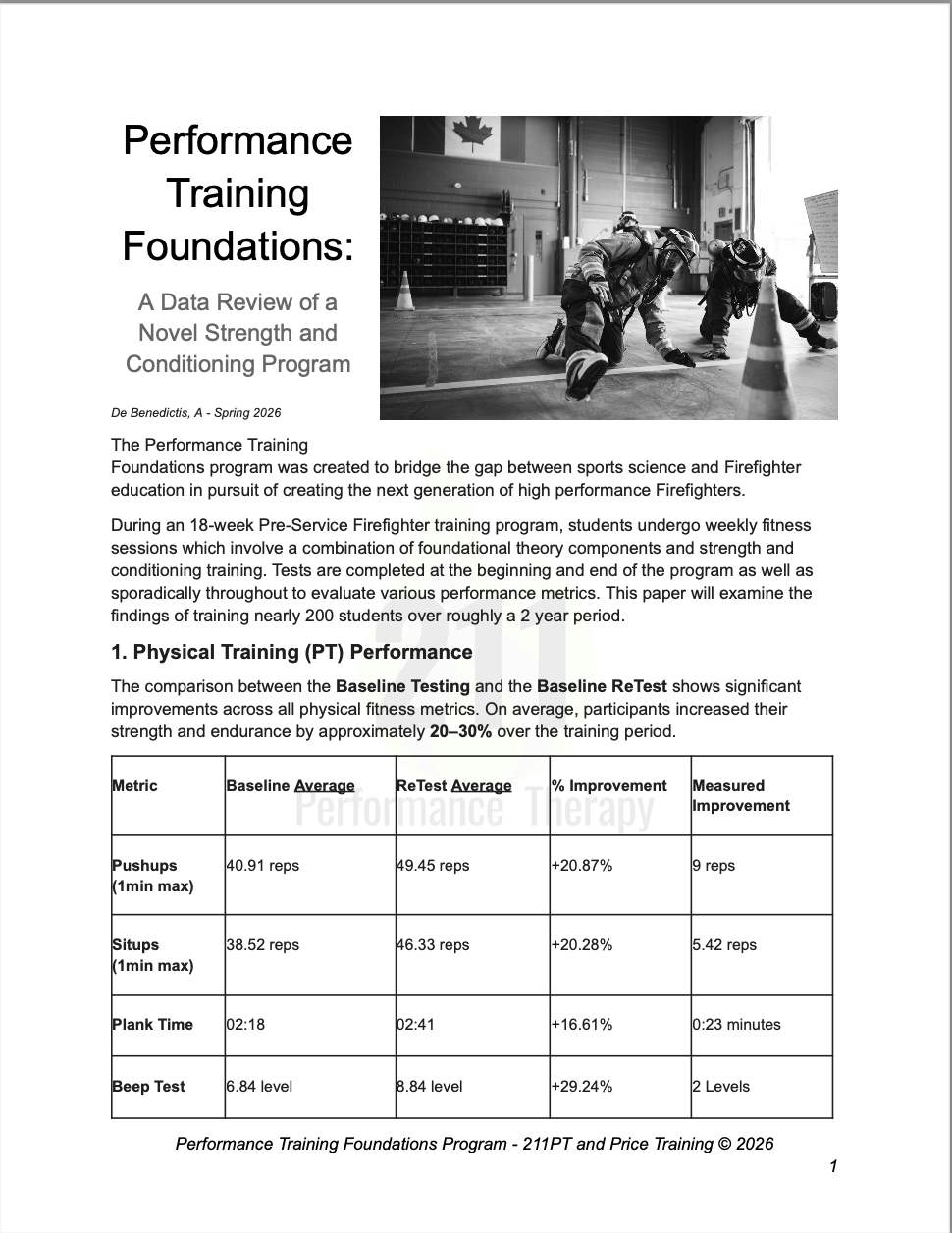
This white paper examines data from nearly 200 Pre-Service Firefighting students participating in the Performance Training Foundations Program!
